

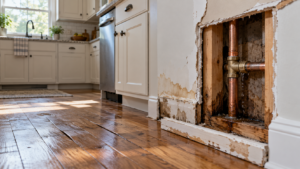
Hidden Water Damage After a Plumbing Leak: Is Your Insurance Estimate Complete?
A plumbing leak can leave more damage than a stained ceiling or wet carpet. Water can travel behind walls, beneath flooring, and into insulation before the problem becomes visible.
For homeowners filing an insurance claim, finding and documenting that damage is an important part of preparing an accurate repair estimate. American Claims helps property owners understand the claim process and present the documented scope of their loss.
Visible Damage May Be Only Part of the Loss
After a pipe breaks or a supply line fails, the most obvious damage often gets the most attention. However, water can move through building materials and affect areas away from the original leak.
Depending on the circumstances, affected materials may include:
- Drywall and ceiling finishes.
- Insulation inside walls and ceilings.
- Hardwood flooring and underlying subfloors.
- Cabinets, vanities, and toe kicks.
- Baseboards, door casings, and trim.
- Personal belongings stored near the leak.
A surface that looks dry does not necessarily establish that the materials behind or beneath it are dry. Appropriate inspection and moisture measurements can help identify the affected area.
Does Homeowners Insurance Cover Hidden Water Damage?
Coverage depends on the policy and the facts of the loss. A sudden pipe break may raise different coverage issues from a leak that continued over an extended period.
The insurance company may evaluate when the leak began, how the damage developed, and whether exclusions or limitations apply. The presence of hidden damage alone does not establish whether the claim is covered or excluded.
Keep a clear record of when you first noticed the problem, what you observed, and what the plumber or mitigation contractor discovered. Avoid guessing about how long a concealed leak existed.
Why the First Insurance Estimate May Need a Supplement
An initial estimate reflects the information available when it was prepared. Additional damage may become visible during necessary drying, removal of affected materials, or repairs.
For example, removing damaged flooring may reveal an affected subfloor. Opening a wet ceiling may expose damaged insulation or additional areas requiring attention.
When new conditions are discovered, document them promptly and notify the insurer. A supplement should explain what additional work is needed, why it relates to the reported loss, and what evidence supports the requested amount.
What Should a Water Damage Estimate Address?
An estimate should reflect the work reasonably needed to repair the documented, covered damage. Depending on the loss, that may involve:
- Access needed to reach damaged materials.
- Removal and disposal of materials that cannot reasonably be restored.
- Drying and other necessary mitigation.
- Replacement of affected insulation, drywall, flooring, or trim.
- Preparation and finishing of repaired surfaces.
- Necessary work involving cabinets or fixtures.
- Applicable permit or code requirements, subject to policy coverage.
Not every item applies to every claim. The goal is an estimate that fits the actual damage and explains the repair process clearly.
How Homeowners Can Strengthen Their Documentation
Photograph Before and During Repairs
Take wide photographs of each affected room and close photographs of individual damaged areas. When concealed damage is exposed, photograph it before repairs cover it again.
Keep Plumbing and Mitigation Records
Save the plumber’s findings, repair invoices, drying records, moisture measurements, and emergency-service documentation. These records can help connect the source of the leak with the resulting damage.
Separate Observations From Assumptions
Describe what you know: when you discovered the water, where it appeared, and what professionals found. Accurate reporting is more useful than speculation about the age or cause of concealed conditions.
Review the Estimate Room by Room
Compare the carrier’s estimate with photographs, contractor findings, and the proposed repair work. Ask for an explanation when documented damage or a necessary repair step appears to be missing.
How American Claims Can Help
Managing a water damage claim involves more than submitting photographs. Homeowners may need help organizing records, evaluating estimates, documenting additional damage, and communicating with the insurance company.
American Claims assists property owners with the claim process and the presentation of documented losses. A careful review can help identify questions about the scope of damage and the work included in the carrier’s estimate.
Has a plumbing leak left you with hidden damage or an estimate that appears incomplete? Contact American Claims to discuss your property insurance claim.